Transfer Learning
Transfer learning optimization techniques improve model performance. Learn how to apply these methods in practice.
Introduction to Transfer Learning Optimization
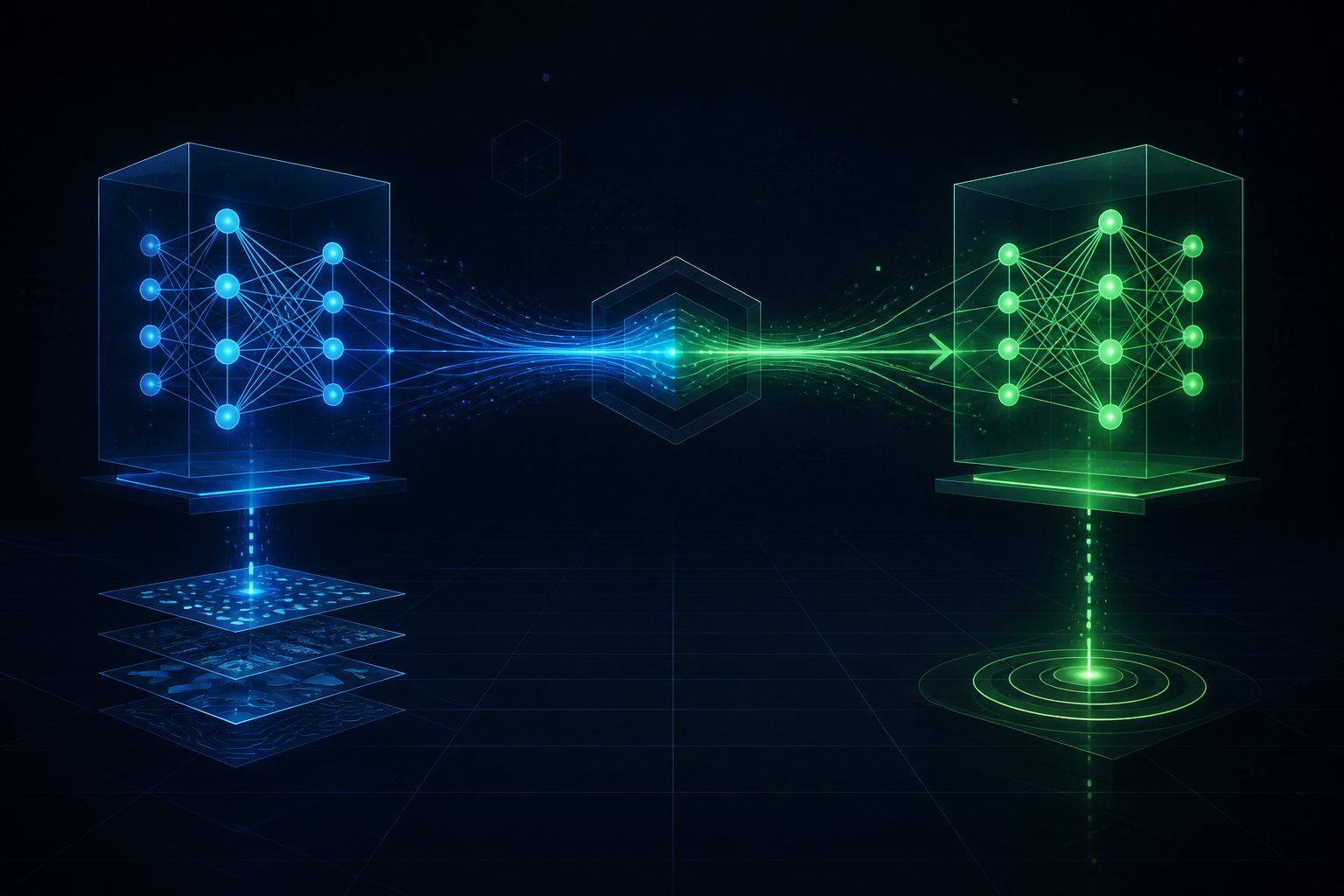
Transfer learning optimization is a crucial aspect of machine learning that enables the reuse of pre-trained models on new, but related tasks. This technique has revolutionized the field by saving time, reducing the need for large datasets, and improving model performance.
Why Transfer Learning Matters
In traditional machine learning, a model is trained from scratch for each new task. However, this approach can be time-consuming and requires a large amount of labeled data. Transfer learning addresses these challenges by leveraging the knowledge gained by a model trained on one task and applying it to another related task.
Core Concept of Transfer Learning
The core concept of transfer learning is to use a pre-trained model as a starting point for a new task. The pre-trained model has already learned general features from the original task, which can be useful for the new task. The key idea is to fine-tune the pre-trained model on the new task, rather than training a new model from scratch.
Types of Transfer Learning
There are two main types of transfer learning:
- Feature extraction: The pre-trained model is used as a feature extractor, and the output of the pre-trained model is used as input to a new classifier.
- Fine-tuning: The pre-trained model is fine-tuned on the new task by adjusting the model's parameters to fit the new data.
Worked Example: Transfer Learning with PyTorch
In this example, we will use PyTorch to fine-tune a pre-trained ResNet-50 model on a new task: classifying images in the CIFAR-10 dataset.
import torch
import torch.nn as nn
import torch.optim as optim
from torchvision import models, datasets, transforms

# Load pre-trained ResNet-50 model
model = models.resnet50(pretrained=True)

# Freeze all layers except the last layer
for param in model.parameters():
    param.requires_grad = False

# Replace the last layer with a new layer
num_classes = 10
model.fc = nn.Linear(model.fc.in_features, num_classes)

# Define the loss function and optimizer
criterion = nn.CrossEntropyLoss()
optimizer = optim.SGD(model.fc.parameters(), lr=0.001)

# Train the model
transform = transforms.Compose([transforms.ToTensor(), transforms.Normalize((0.5, 0.5, 0.5), (0.5, 0.5, 0.5))])
trainset = datasets.CIFAR10('~/.pytorch/CIFAR_data/', download=True, train=True, transform=transform)
trainloader = torch.utils.data.DataLoader(trainset, batch_size=64, shuffle=True)

for epoch in range(10):
    running_loss = 0.0
    for i, data in enumerate(trainloader, 0):
        inputs, labels = data
        optimizer.zero_grad()
        outputs = model(inputs)
        loss = criterion(outputs, labels)
        loss.backward()
        optimizer.step()
        running_loss += loss.item()
    print('Epoch %d, loss = %.3f' % (epoch+1, running_loss/(i+1)))
Pitfalls of Transfer Learning
While transfer learning can be a powerful technique, there are several pitfalls to watch out for:
- Overfitting: The pre-trained model may overfit the new task, especially if the new task has a small amount of data.
- Underfitting: The pre-trained model may underfit the new task, especially if the new task is very different from the original task.
- Domain shift: The pre-trained model may not perform well on the new task if there is a significant domain shift between the original task and the new task.
What to Read Next
For more information on transfer learning, we recommend reading the following papers:
- [1] Yosinski, J., Clune, J., Bengio, Y., & Lipson, H. (2014). How transferable are features in deep neural networks? In Proceedings of the 32nd International Conference on Machine Learning (pp. 3320-3328).
- [2] Donahue, J., Jia, Y., Vinyals, O., Hoffman, J., Zhang, N., Tzeng, E., & Darrell, T. (2014). DeCAF: A deep convolutional activation feature for generic visual recognition. In Proceedings of the 31st International Conference on Machine Learning (pp. 647-655).