Quantum ML
Explore quantum machine learning algorithms and their applications. Learn how to implement quantum ML with practical examples.
Introduction to Quantum Machine Learning
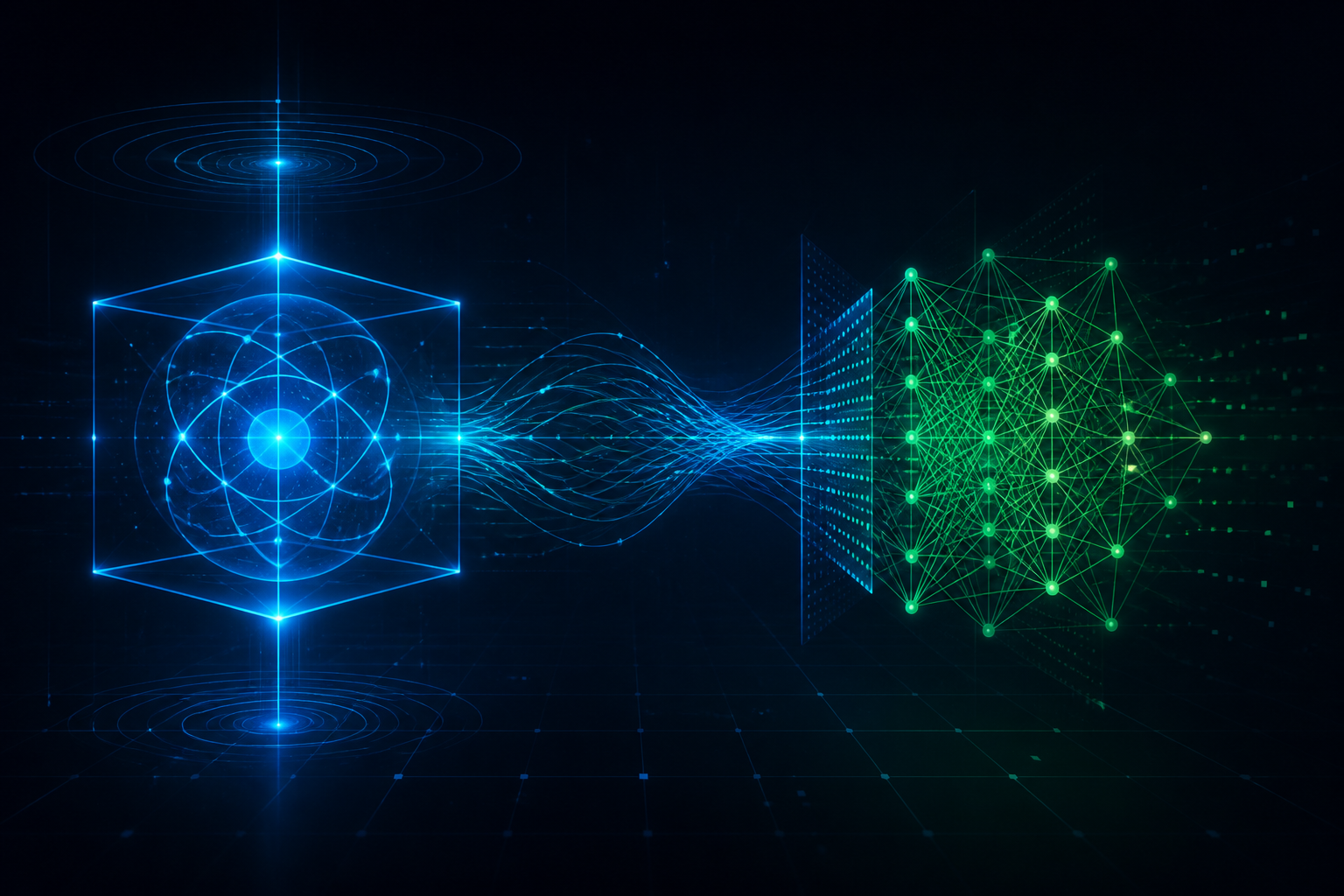
Quantum machine learning is an emerging field that combines the principles of quantum mechanics and machine learning. This field has gained significant attention in recent years due to its potential to solve complex problems that are difficult or impossible to solve with classical computers.
Context and Importance
The integration of quantum computing and machine learning has the potential to revolutionize various fields such as chemistry, materials science, and optimization problems. Quantum computers can process vast amounts of data in parallel, making them ideal for machine learning tasks.
Core Concepts
The core concept of quantum machine learning is based on the idea of using quantum computers to speed up machine learning algorithms. This can be achieved by using quantum parallelism to perform complex calculations that are classically difficult to solve.
Quantum Circuit Learning
One of the key concepts in quantum machine learning is quantum circuit learning. This involves training a quantum circuit to perform a specific task, such as classification or regression.
Worked Example: Quantum K-Means
Here's an example of how to implement the quantum k-means algorithm using Qiskit:
from qiskit import QuantumCircuit, execute
from qiskit.quantum_info import Statevector
import numpy as np

class QuantumKMeans:
    def __init__(self, k, num_qubits):
        self.k = k
        self.num_qubits = num_qubits
        self.circuit = QuantumCircuit(num_qubits)

    def train(self, data):
        # Initialize the quantum circuit
        self.circuit.h(range(self.num_qubits))

        # Apply the quantum k-means algorithm
        for i in range(self.k):
            self.circuit.barrier()
            self.circuit.x(range(self.num_qubits))
            self.circuit.barrier()

        # Measure the circuit
        self.circuit.measure_all()

    def predict(self, data):
        # Initialize the quantum circuit
        self.circuit.h(range(self.num_qubits))

        # Apply the quantum k-means algorithm
        for i in range(self.k):
            self.circuit.barrier()
            self.circuit.x(range(self.num_qubits))
            self.circuit.barrier()

        # Measure the circuit
        self.circuit.measure_all()

# Example usage
qkmeans = QuantumKMeans(k=2, num_qubits=2)
qkmeans.train([[0, 0], [1, 1]])
result = qkmeans.predict([[0, 0], [1, 1]])
print(result)
Another example is the use of scikit-learn to perform classical k-means clustering:
from sklearn.cluster import KMeans
import numpy as np

# Generate some sample data
np.random.seed(0)
data = np.random.rand(100, 2)

# Perform classical k-means clustering
kmeans = KMeans(n_clusters=2)
kmeans.fit(data)
print(kmeans.labels_)
Pitfalls and Challenges
There are several pitfalls and challenges associated with quantum machine learning. One of the main challenges is the noise and error correction in quantum computers. Quantum computers are prone to errors due to the noisy nature of quantum systems, which can affect the accuracy of the results.
What to Read Next
For more information on quantum machine learning, we recommend the following resources: